
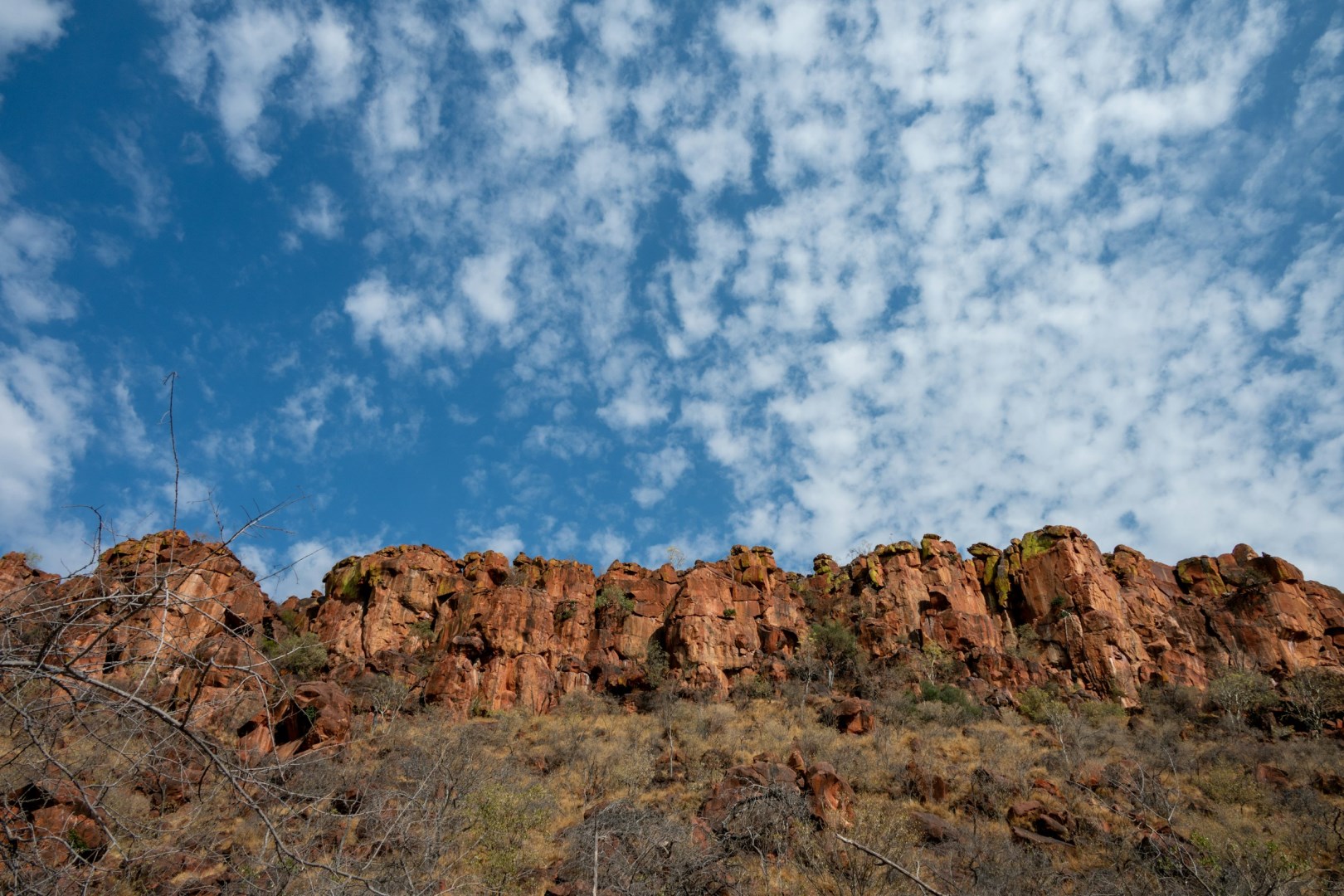
Waterberg Plateau National Park is a protected area in central Namibia, known for its long sandstone plateau rising above surrounding savanna and thornbush. The porous sandstone supports permanent springs at the base of the plateau, creating greener habitats than those found across much of the surrounding region. The park covers about 405 square kilometres and forms part of the northern Kalahari landscape. Its cliffs, valleys, rocky slopes, and wooded plains provide habitat for rare wildlife and make Waterberg a notable conservation area between the central highlands and the drier interior of Namibia.
Waterberg also has an important place in Namibia’s cultural and political history. The area is associated with the Herero communities and the conflict between Herero fighters and German colonial forces, which had severe consequences for the Herero people. Earlier human activity is represented by rock engravings and archaeological evidence found in the wider Waterberg area. The park’s conservation role is also significant, as it was established as a sanctuary for rare and endangered species and has been used to breed animals for reintroduction into other conservation areas.
The plateau itself is the park’s defining landscape, with colorful sandstone cliffs extending for roughly 50 kilometres. Hiking routes lead through the plateau’s rocky terrain and offer views over the surrounding Kalahari plains, while guided drives provide opportunities to observe wildlife. Waterberg supports black and white rhinoceros, buffalo, roan and sable antelope, eland, tsessebe, leopard, and other species. More than 200 bird species have been recorded, including Rüppell’s parrot, Monteiro’s hornbill, Bradfield’s hornbill, Rockrunner, and Cape vulture. Permanent springs support plant communities that differ from the surrounding dry savanna.
Waterberg is particularly important for the conservation of rare species and Namibia’s remaining Cape vulture population. The plateau’s vegetation includes leadwood, silver terminalia, kudu bush, several acacia species, and laurel fig, along with numerous lichen species. Visitors can stay at the Bernabé de la Bat Rest Camp, which offers accommodation, camping, a restaurant, and short walking trails. Longer hiking and wilderness routes require advance arrangements. The park’s combination of sandstone cliffs, permanent springs, rare wildlife, and conservation research makes it an important protected landscape in central Namibia.
Other Popular Destinations in Namibia